

“بحلول نهاية هذا العام، كم سنة ستكون قد أمضيتها في تعلم اللغة الإنجليزية؟ عندما تتقاعد، كم عاماً ستكون قد عملت؟ كيف تتحدث عن مدة استمرار حدث حتى نقطة زمنية معينة في المستقبل؟ هذا ما ستعرفه اليوم.”
📌 ما هو المستقبل التام المستمر؟
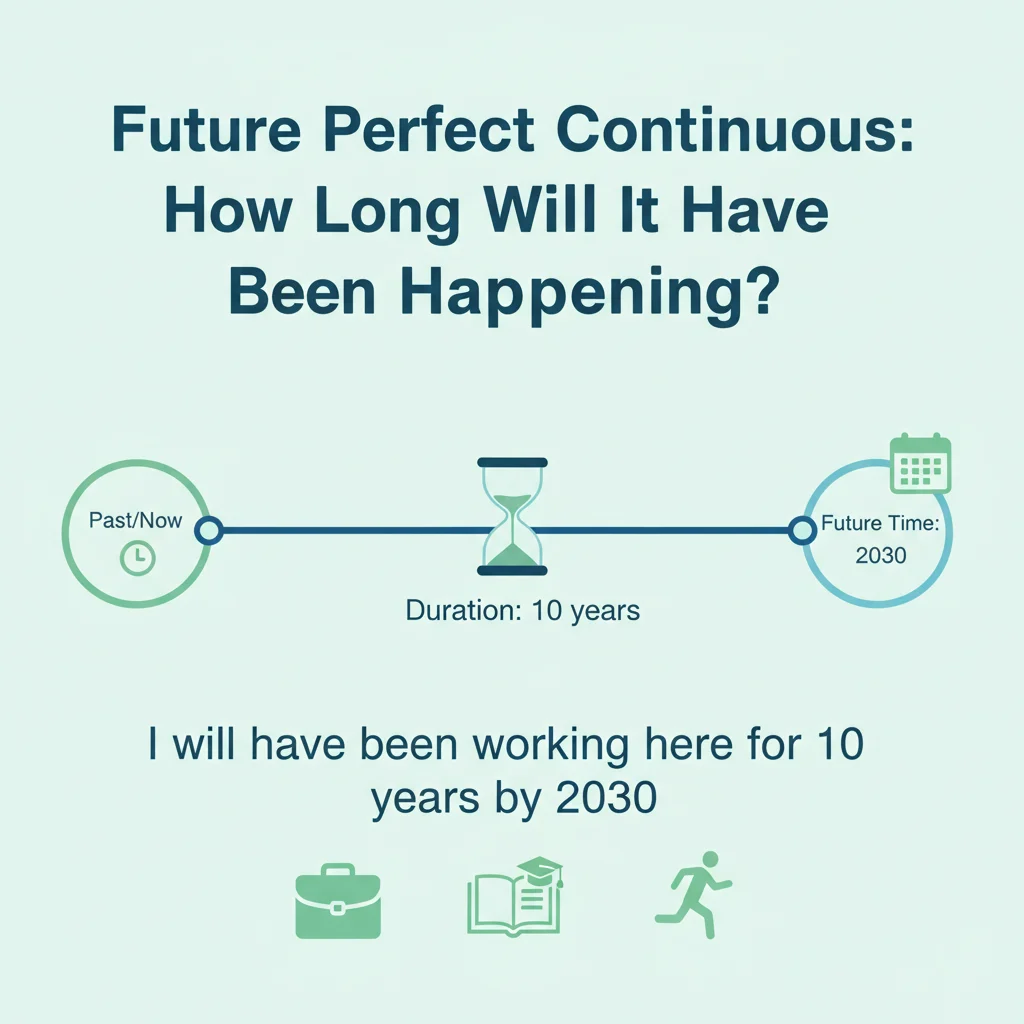
المستقبل التام المستمر هو زمن يُستخدم للتعبير عن حدث أو فعل سيبدأ في الماضي أو الحاضر ويستمر بشكل مستمر حتى نقطة زمنية محددة في المستقبل، مع التركيز على المدة التي سيستمر فيها هذا الفعل. يتكون هذا الزمن من أربعة أجزاء:
will + have + been + الفعل + ing
🔑 الفكرة الأساسية: المستقبل التام المستمر يجيب على السؤال “بحلول وقت X، كم من الوقت سيكون قد استمر هذا الفعل؟” (By time X, how long will the action have been going on?).
🕰️ متى نستخدم المستقبل التام المستمر؟ (3 حالات رئيسية)
1️⃣ للتعبير عن مدة حدث يمتد من الماضي/الحاضر حتى وقت مستقبلي
نستخدمه مع for (لمدة) و since (منذ) لإظهار طول فترة استمرار الفعل حتى لحظة مستقبلية.
By next year, I will have been studying English for five years.
(بحلول العام القادم، سأكون قد درست اللغة الإنجليزية لمدة خمس سنوات – وما زلت سأدرسها حتى ذلك الوقت)
She will have been working at this company for ten years by 2030.
(ستكون قد عملت في هذه الشركة لمدة عشر سنوات بحلول 2030)
They will have been living in Dubai since 2020 by the end of this year.
(سيكونون قد عاشوا في دبي منذ 2020 بحلول نهاية هذا العام)
2️⃣ للتعبير عن سبب أو نتيجة متوقعة في المستقبل بناءً على مدة الاستمرار
عندما نريد أن نخمن سبب حالة مستقبلية بناءً على كم من الوقت استمر شيء ما.
He will be tired because he will have been working all night.
(سيكون متعباً لأنه سيكون قد عمل طوال الليل)
The children will be exhausted because they will have been playing for hours.
(سيكون الأطفال مرهقين لأنهم سيكونون قد لعبوا لساعات)
The ground will be wet because it will have been raining for days.
(ستكون الأرض مبللة لأن المطر سيكون قد هطل لأيام)
3️⃣ للتأكيد على استمرارية حدث قبل حدث مستقبلي آخر
يمكن استخدامه مع before أو by the time لإظهار أن حدثاً طويلاً سيسبق حدثاً آخر في المستقبل.
By the time you retire, you will have been working for 40 years.
(بحلول وقت تقاعدك، ستكون قد عملت لمدة 40 عاماً)
Before the project ends, we will have been developing this software for three years.
(قبل انتهاء المشروع، سنكون قد طورنا هذا البرنامج لمدة ثلاث سنوات)
🔑 الكلمات المفتاحية (Time Expressions) للمستقبل التام المستمر
| الكلمة/العبارة | المعنى | مثال |
|---|---|---|
| for | لمدة (فترة زمنية) | I will have been waiting for two hours. |
| since | منذ (نقطة زمنية) | She will have been working since 2015. |
| by (time) | بحلول (الوقت) | By 2030, he will have been teaching for 20 years. |
| by the time | بحلول الوقت الذي | By the time you arrive, I will have been waiting for an hour. |
| before | قبل | Before she retires, she will have been working here for 30 years. |
📐 كيف نكون المستقبل التام المستمر؟ (القواعد كاملة)
أ. الجمل المثبتة (Positive)
الصيغة:الفاعل + will + have + been + الفعل + ing
ملاحظة: will هو نفسه لجميع الفاعلين.
| الفاعل | will | have | been | الفعل + ing | مثال كامل |
|---|---|---|---|---|---|
| I | will | have | been | waiting | I will have been waiting for an hour. |
| You | will | have | been | studying | You will have been studying all day. |
| He/She/It | will | have | been | running | She will have been running for 30 minutes. |
| We | will | have | been | working | We will have been working hard. |
| They | will | have | been | traveling | They will have been traveling for months. |
✅ أمثلة إضافية:
- He will have been reading for two hours by the time we arrive. (سيكون قد قرأ لمدة ساعتين بحلول وقت وصولنا)
- We will have been living in this house for a decade next month. (سنكون قد عشنا في هذا المنزل لعقد من الزمن الشهر القادم)
- The baby will have been crying all night by morning. (سيكون الطفل قد بكى طوال الليل بحلول الصباح)
ب. النفي (Negative)
الصيغة:الفاعل + will + not + have + been + الفعل + ing
الاختصار: will not = won’t
✅ أمثلة:
- I will not (won’t) have been sleeping for long when you call. (لن أكون قد نمت لفترة طويلة عندما تتصل)
- She won’t have been practicing enough before the concert. (لن تكون قد تدربت بما يكفي قبل الحفلة)
- They won’t have been waiting for more than ten minutes. (لن يكونوا قد انتظروا لأكثر من عشر دقائق)
ج. السؤال (Questions)
الصيغة:Will + الفاعل + have + been + الفعل + ing + ؟
✅ أمثلة:
- Will you have been waiting long before the bus comes? (هل ستكون قد انتظرت طويلاً قبل أن تأتي الحافلة؟)
- How long will she have been studying by the time she takes the exam? (كم من الوقت ستكون قد درست بحلول وقت تقديمها للامتحان؟)
- Will they have been traveling for a month by next week? (هل سيكونون قد سافروا لمدة شهر بحلول الأسبوع القادم؟)
- How many hours will you have been working by the end of the day? (كم ساعة ستكون قد عملت بحلول نهاية اليوم؟)
الإجابات القصيرة:
- Yes, I will. / No, I won’t.
- Yes, she will. / No, she won’t.
- Yes, they will. / No, they won’t.
⚖️ الفرق بين المستقبل التام المستمر والأزمنة المشابهة
1. الفرق بين المستقبل التام المستمر والمستقبل التام البسيط
| المعيار | المستقبل التام المستمر | المستقبل التام البسيط |
|---|---|---|
| التركيز | على مدة واستمرارية الفعل | على إنجاز الفعل أو كميته |
| السؤال الأساسي | How long? (كم من الوقت؟) | How much/many? (كم كمية/عدد؟) |
| أمثلة | By 5 PM, I will have been working for 3 hours. | By 5 PM, I will have finished 3 reports. |
| أمثلة | She will have been running for an hour. | She will have run 10 kilometers. |
2. الفرق بين المستقبل التام المستمر والمستقبل المستمر
| المعيار | المستقبل التام المستمر | المستقبل المستمر |
|---|---|---|
| التركيز | المدة حتى نقطة مستقبلية | الاستمرارية في نقطة مستقبلية |
| أمثلة | At 8 PM, I will have been working for 10 hours. | At 8 PM, I will be working. |
💡 قاعدة ذهبية: استخدم المستقبل التام المستمر عندما تريد الإجابة على “كم من الوقت سيكون قد استمر هذا الفعل بحلول وقت معين؟” (How long?). استخدم المستقبل التام البسيط عندما تريد الإجابة على “كم عدد/كم كمية سأكون قد أنجزت؟” (How many/much?).
📝 50+ مثالاً متنوعاً على المستقبل التام المستمر
أمثلة مع for (لمدة)
- By next June, I will have been teaching for ten years.
- She will have been waiting for the bus for 30 minutes by 8 AM.
- They will have been living in this city for 15 years by 2030.
- He will have been working as a doctor for 20 years when he retires.
- We will have been studying Chinese for three years by the end of this semester.
أمثلة مع since (منذ)
- By the end of this year, she will have been working here since 2016.
- He will have been playing the piano since childhood when he turns 30.
- They will have been living in Paris since 2020 by next month.
- I will have been learning English since 2015 by my graduation.
- The company will have been operating since 2000 by next year.
أمثلة مع by / by the time (بحلول)
- By the time you arrive, I will have been cooking for two hours.
- By 8 PM, they will have been driving for twelve hours straight.
- By the end of the week, we will have been rehearsing for the play every day.
- By the time the movie starts, he will have been waiting in line for an hour.
- By 2050, scientists will have been researching a cure for cancer for decades.
أمثلة مع before (قبل)
- Before she graduates, she will have been studying medicine for six years.
- Before the store closes, the employees will have been working for ten hours.
- Before the sun sets, we will have been hiking for eight hours.
- Before he sells his house, he will have been owning it for 30 years.
- Before the product launches, the team will have been developing it for two years.
أمثلة للتعبير عن السبب (because)
- She will be exhausted because she will have been dancing all night.
- He will be hungry because he will have been fasting for 16 hours.
- The children will be dirty because they will have been playing in the mud.
- The plants will be overgrown because we will have been neglecting the garden.
- His hands will be sore because he will have been typing for hours.
أمثلة نفي (Negative)
- By tomorrow, I won’t have been sleeping well for weeks.
- She won’t have been exercising regularly before the marathon.
- They won’t have been saving money by the time they retire.
- He won’t have been studying enough when the exam comes.
- We won’t have been practicing long before the competition.
أمثلة سؤال (Questions)
- How long will you have been working here by next year?
- Will she have been waiting for a long time before we arrive?
- How many hours will they have been driving by the time they reach the border?
- Will you have been studying for more than two hours by noon?
- How long will he have been living in that apartment before he moves?
أمثلة مع الروتين اليومي
- By 6 PM today, I will have been working on this project for eight hours.
- By midnight, she will have been traveling for 12 hours.
- By the end of this shift, the nurses will have been caring for patients for 12 hours.
- By the time we finish dinner, the baby will have been sleeping for two hours.
- By the end of the year, I will have been writing this blog for three years.
أمثلة من الحياة اليومية
- Next month, my parents will have been married for 25 years. (ملاحظة: married صفة، لكن مع been نستخدم الصيغة المستمرة)
- By the time you read this message, I will have been flying for six hours.
- When the concert ends, the band will have been playing for three hours.
- By the time we get to the cinema, the movie will have been showing for 20 minutes.
- He will have been jogging for an hour by the time you wake up.
- By the end of the vacation, we will have been relaxing for two whole weeks.
- She will have been taking medication for a month by her next checkup.
- They will have been constructing the bridge for five years by 2029.
- By the time the rain stops, it will have been drizzling all day.
- I will have been dreaming about this day for years when it finally comes.
🎯 6 أخطاء شائعة (وكيف تتجنبها)
| الخطأ ❌ | الصواب ✅ | الشرح |
|---|---|---|
| I will have been work for two hours | I will have been working for two hours | نسيان ing بعد been |
| She will has been studying | She will have been studying | بعد will نستخدم have، وليس has |
| They won’t have been go | They won’t have been gone? (غير صحيح) → They will have been going | لا نستخدم التصريف الثالث، بل ing. لكن الفعل go هنا يصبح going. |
| By next week, I am working for 5 years | By next week, I will have been working for 5 years | زمن خاطئ؛ يجب استخدام المستقبل التام المستمر |
| How long you will have been waiting? | How long will you have been waiting? | ترتيب السؤال: Will + فاعل + have been + ing |
| He will have been being tired | He will have been tired (أو will be tired) | being مع الصفات غير ضروري هنا؛ استخدم الماضي التام المستمر فقط مع أفعال الحركة |
🧠 تمارين تفاعلية مع الحلول
تمرين 1 – املأ الفراغ بالشكل الصحيح للمستقبل التام المستمر:
- By next year, I _______ (study) English for five years.
- She _______ (not / wait) for long when the bus arrives.
- How long _______ (you / learn) French by the end of this course?
- By 10 PM, they _______ (drive) for eight hours straight.
- The workers _______ (build) this bridge for three years by 2025.
تمرين 2 – اختر الصيغة الصحيحة (Future Perfect Continuous أو Future Continuous أو Future Perfect):
- At 8 PM tonight, I _______ (will be having / will have been having) dinner.
- By 8 PM tonight, I _______ (will have eaten / will have been eating) dinner for an hour.
- By next month, she _______ (will have lived / will have been living) here for ten years.
- This time next week, they _______ (will be traveling / will have been traveling) to Istanbul.
- By the time the race ends, he _______ (will run / will have been running) for two hours.
تمرين 3 – صحح الأخطاء في الجمل التالية:
- By Friday, I will have been work on this project for three weeks.
- She will has been teaching for ten years by 2030.
- How long will they have been wait before the concert starts?
- He won’t have been drive for long by the time we arrive.
- I will have been knowing her for 15 years next month.
📌 الإجابات:
- will have been studying
- won’t have been waiting
- will you have been learning
- will have been driving
- will have been building
- will be having (Focus on action at that moment)
- will have been eating (Focus on duration up to that time)
- will have been living (Both possible, but continuous emphasizes duration)
- will be traveling (Specific future time)
- will have been running
- By Friday, I will have been working on this project for three weeks.
- She will have been teaching for ten years by 2030.
- How long will they have been waiting before the concert starts?
- He won’t have been driving for long by the time we arrive.
- I will have known her for 15 years next month. (know – stative verb, use simple form)
📊 جدول ملخص لقواعد استخدام المستقبل التام المستمر
| الاستخدام | الشرح | مثال |
|---|---|---|
| مدة مستمرة حتى نقطة مستقبلية | مع for, since, by the time | I will have been working for 10 hours by 6 PM. |
| سبب متوقع نتيجة للمدة | لأنه سيستمر لفترة طويلة | He will be tired because he will have been running. |
| سؤال عن المدة (How long) | مع will + have been + ing | How long will you have been studying? |
❓ الأسئلة الشائعة (FAQ) حول المستقبل التام المستمر
س1: هل يمكن استخدام المستقبل التام المستمر مع أفعال الحالة (stative verbs) مثل know, believe, love؟
ج: لا، أفعال الحالة لا تستخدم في الأزمنة المستمرة. بدلاً من ذلك، نستخدم المستقبل التام البسيط: By next year, I will have known her for a decade (وليس will have been knowing).
س2: ما الفرق بين “I will have worked here for 10 years” و “I will have been working here for 10 years”؟
ج: كلاهما صحيح ويعنيان نفس الشيء تقريباً. الفرق بسيط: المستمر يضع تركيزاً أكبر على استمرارية العمل والنشاط، بينما البسيط يركز على إنجاز فترة العشر سنوات. في الممارسة العملية، غالباً ما يستخدمان بالتبادل مع for + فترة زمنية.
س3: هل من الضروري استخدام المستقبل التام المستمر مع “by the time”؟
ج: ليس ضرورياً، لكنه مناسب جداً. يمكن استخدام المستقبل التام البسيط أيضاً: By the time you arrive, I will have finished cooking. لكن إذا أردت التركيز على المدة، استخدم المستمر: By the time you arrive, I will have been cooking for two hours.
س4: كيف أتذكر متى أستخدم هذا الزمن؟
ج: ابحث عن منذ متى؟ (How long?) + بحلول وقت مستقبلي (by future time). إذا كنت تجيب عن السؤال “كم من الوقت سيكون قد استمر؟”، فهذا هو الزمن المناسب.
س5: هل يمكن استخدام المستقبل التام المستمر في جمل شرطية؟
ج: نادراً، لكن يمكن في الجمل الشرطية من النوع الأول مع نتائج مستقبلية: If you keep working like this, by the end of the day you will have been typing for ten hours.
س6: ما هي أكثر الكلمات شيوعاً مع هذا الزمن؟
ج: for (لمدة)، since (منذ)، by the time (بحلول الوقت الذي)، by + تاريخ/وقت (بحلول)، before (قبل).
💡 5 نصائح ذهبية لإتقان المستقبل التام المستمر
- ركز على “How long?”: كلما تخطط لمشروع أو هدف طويل المدى، اسأل نفسك: By [future date], how long will I have been doing this? مثال: By 2028, how long will I have been learning English? – I will have been learning for 10 years.
- اجمع بين for و by: تدرب على كتابة جمل تبدأ بـ By the time… وتنتهي بـ …will have been + ing + for… مثال: By the time I graduate, I will have been studying at this university for four years.
- استخدمه مع المهن والمهارات: تحدث عن مستقبلك المهني: By 2035, I will have been working as a teacher for 20 years.
- فرق بينه وبين المستقبل المستمر: اكتب جملتين لنفس الوقت: *At 8 PM, I will be sleeping. / By 8 PM, I will have been sleeping for two hours.* لاحظ الفرق بين النقطة والامتداد.
- شاهد مقابلات مع أشخاص ناجحين: غالباً ما يستخدمون هذا الزمن عند الحديث عن مسيرتهم: By the time I won the award, I had been practicing for 15 years. (النسخة الماضية). تدرب على تحويلها إلى مستقبل: By the time I retire, I will have been working for 40 years.
🎁 الخاتمة
المستقبل التام المستمر هو قمة الدقة الزمنية في اللغة الإنجليزية. بينما تتحدث معظم الأزمنة عن الماضي أو الحاضر أو المستقبل بشكل منفصل، فإن هذا الزمن يربط بين الأزمنة الثلاثة: يبدأ في الماضي أو الحاضر، ويستمر عبر الوقت، وينتهي عند نقطة مستقبلية، مع التركيز على طول المدة. إتقانه سيجعل أسلوبك راقياً واحترافياً، خاصة في الكتابات الأكاديمية والتقارير المهنية.
تذكر القاعدة الذهبية: استخدم المستقبل التام المستمر عندما تريد الإجابة على “كم من الوقت” (How long) لحدث سيستمر حتى نقطة زمنية محددة في المستقبل. ابحث عن الكلمات المفتاحية: for, since, by the time, by + تاريخ.
📌 شاركنا في التعليقات:
By the end of this year, how long will you have been learning English? By the time you turn 40, what will you have been doing for a long time?
(بحلول نهاية هذا العام، كم من الوقت ستكون قد تعلمت اللغة الإنجليزية؟ بحلول وقت بلوغك الأربعين، ماذا ستكون قد فعلت لفترة طويلة؟)
اكتب جملتين باستخدام المستقبل التام المستمر – وسنقوم بتصحيحها لك!
لا تنسَ مشاركة هذا المقال مع صديق يتعلم اللغة الإنجليزية، واطلع على أدلتنا الأخرى في مدونتنا:
[دليل الأزمنة فاللغة الإنجليزية]، [دليل اختبار STEP]، [دليل IELTS]، [دليل TOEFL].
